
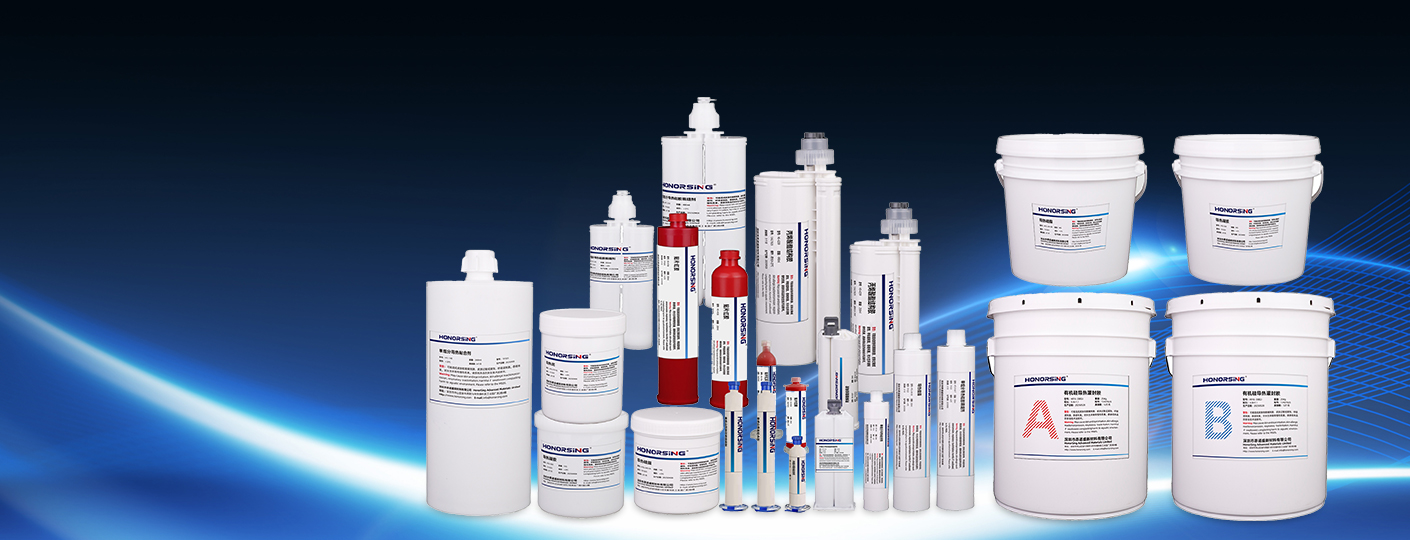
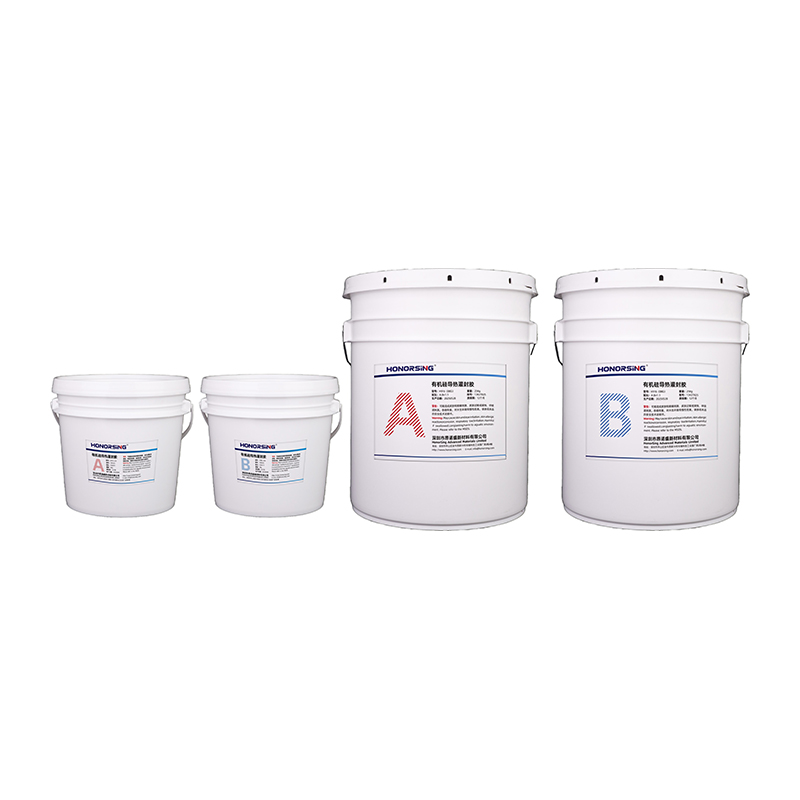
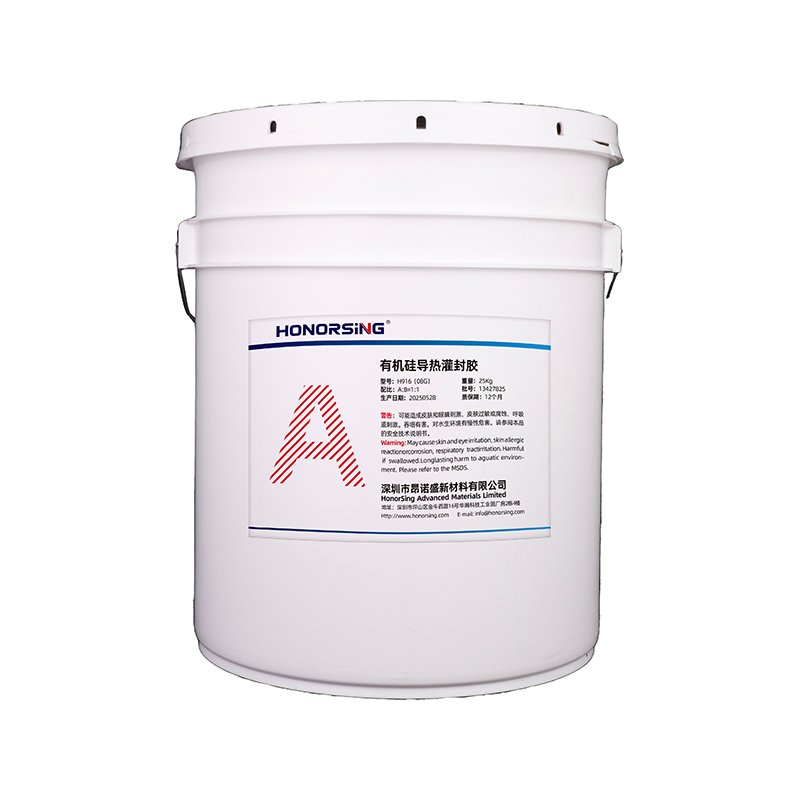
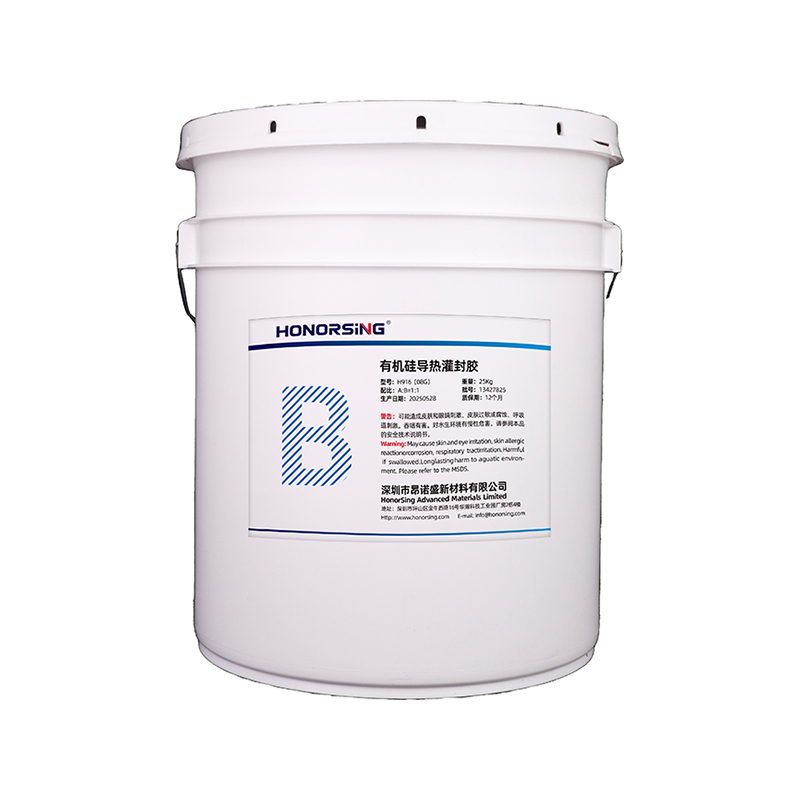
High thermal conductivity, low thermal resistance;
Addition reaction, no volume change occurs during the curing process;
Low viscosity, good leveling performance, suitable for sealing small modules and complex electronic module components;
Fast curing at room temperature or high temperature, 100% solid, no exudate after curing;
Not hydrophilic, can block the influence of moisture and dust on components;
Low density type, meeting the market's demand for lightweight;
Superior resistance to high and low temperatures, weather, aging, and electrical insulation;
Passed UL94 V-0 flame retardant certification and RoHS hazardous standard verification.
Additive formed thermal conductive sealant
Product Introduction
Used for bonding, sealing, and packaging protection of electronic components. After curing, it can play a role in waterproofing, moisture-proof, dust-proof, insulation, thermal conductivity, sealing, corrosion resistance, temperature resistance, shock resistance, etc. It can improve the performance of electronic and electrical components, strengthen the integrity of electronic components, enhance resistance to external impacts and vibrations, and improve the insulation between internal components and circuits
Application scope:
Used for thermal conductivity and sealing of heat dissipation components in power modules. After curing, it can provide functions such as waterproofing, insulation, thermal conductivity, temperature resistance, and shock resistance.
| Condensation type waterproof Encapsulant | ||||
| model | 315 series | 316 series | 319 series | Testing Standard |
| color | Black, white, transparent | black, white | Black, white, matte | visual estimation |
| Mixing weight ratio | 10:1 | 10:1 | 10:1 | Adhesive Analysis and Testing Technology |
| Viscosity after mixing at 25 ℃ (mPa · S) | 500~1000 | 1000~1500 | 700~1000 | GB/T 2794-1995 |
| Dry time (min. 25 ℃) | 40~90 | 50~90 | 30~50 | GB/T 13477.5-2002 |
| Operable time (min. 25 ℃) | 30~60 | 30~50 | 20~30 | Adhesive Analysis and Testing Technology |
| Complete curing time (h.25 ℃) | 24 | 24 | 24 | Adhesive Analysis and Testing Technology |
| Relative density (g/cm3) | 0.98~1.2 | 1.08 | 1.13 | GB/T 533-2008 |
| Hardness (Shore A) | 10~25 | 15~25 | 10~15 | GB/T 531.1-2008 |
| Tensile elongation at break (%) | ≥140 | ≥130 | ≥130 | GB/T 528-2009 |
| Tensile strength (MPa) | ≥0.35 | ≥0.5 | ≥0.6 | GB/T 528-2009 |
| Thermal conductivity (W/m · k) | 0.4 | 0.4 | 0.3 | ASTM D5470-06 |
| Volume resistivity (Ω· cm. 25 ℃) | ≥1×10¹⁴ | ≥1×10¹⁴ | ≥1×10¹⁴ | GB/T 1692-2008 |
| Dielectric strength (KV/mm) | ≥20 | ≥18 | ≥20 | GB/T 1695-2005 |
| Dielectric constant (1.2MHz) | ≤4.0 | ≤4.0 | ≤4.0 | GB/T 1693-2007 |
| Temperature range for use (℃) | -40~150 | -40~150 | -40~150 | Adhesive Analysis and Testing Technology |